Camping & wilderness
For desert trips and for the day an evacuation puts the family outdoors. The desert forgives nothing improvised at the last minute — and is perfectly safe for the prepared.
- Trip rules
- Packing
- Shelter building
- Navigation without GPS
- Signaling for help
- Reading weather
- Hazards
The rules that prevent rescues
- Tell someone: exact route, campsite, and return time — someone at home who will raise the alarm if you're overdue. This one habit finds lost people fastest.
- Never travel the desert with one vehicle if avoidable; two vehicles turn a breakdown into an inconvenience. Off-road: lower tire pressures on sand, carry a compressor, boards, tow strap, and shovel.
- Water math is trip math: minimum 4–5 L per person per day in cool months, 8+ in heat — plus a full reserve day. When a third of your water is gone, turn back.
- Fuel and battery margins: half-tank rule outbound; phones charged, banks full, offline maps downloaded (how).
- Check the forecast — heat, wind, and (crucially) rain upstream of any wadi you'll cross or camp near.
- If a vehicle strands you: stay with the vehicle. It is shade, water storage, a signal mirror the size of a room, and what searchers can actually see. People who walk for help in heat usually lose.
Packing
Pack around the survival priorities — shelter/shade, water, signaling, first aid — then comfort. The car kit stays in the vehicle; this list rides on your back for day walks:
- Water (most of the weight, always) + purification tablets or filter as backup.
- Sun armor: wide hat, sunglasses, sunscreen, long loose light-colored sleeves, shemagh/scarf.
- Navigation: paper map of the area, compass, and the phone as backup — not the reverse.
- Signaling: whistle, signal mirror, torch/headlamp with spare batteries.
- Shelter: tarp or mylar blankets + cord (shade at midday, warmth at night).
- First aid kit incl. elastic bandage (sprains, snakebite pressure wraps), tweezers, ORS sachets.
- Fire: lighter + backup matches/ferro rod + a few petroleum-jelly cotton balls.
- Food: salty + sweet + dense: nuts, dates, crackers, jerky. Salt matters as much as calories when you sweat.
- Knife or multi-tool, cord (15 m), duct tape (wrapped around a bottle to save space).
- Layers for night — desert temperature swings 20°C+ between noon and 4 a.m.
Shelter building
Site selection — before any building
- Never camp in a wadi bed or drainage channel, however dry and inviting the flat sand looks. Flash floods arrive at night from rain you never saw. Camp on the banks, above the high-water debris line.
- Avoid: the very tops of exposed ridges (wind, lightning), the base of loose slopes and dunes (slides, rolling rock), lone trees (lightning), animal burrows and dense brush (snakes, scorpions), and below the only shade tree's dead branches.
- Favor: level ground with morning-sun/afternoon-shade, natural windbreaks, and — if you need one — walking distance to water, never beside it (animals visit water at night; insects own the banks).
Shade shelter (the desert priority)
- Stretch a tarp between the vehicle and poles/rocks, or between any two anchors, roof sloped toward the sun's arc, one side open downwind for airflow.
- Double-roof trick: two layers (tarp above blanket, or two tarps) with a 20–30 cm air gap cuts the heat radiating down dramatically — the desert traveler's air conditioning.
- Sit raised off the hot ground if possible; ground surface at noon can exceed 60°C.
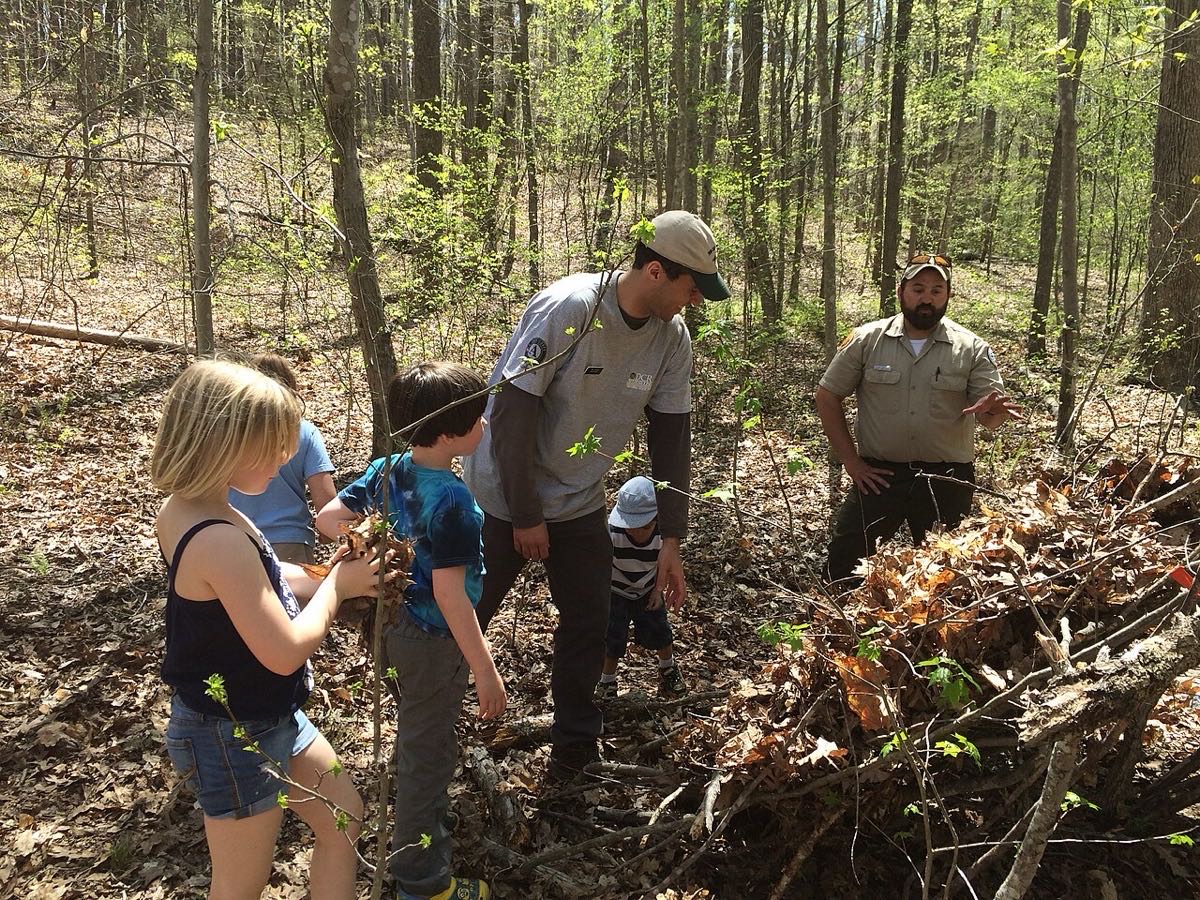
Night/wind shelter
- Low tarp lean-to with its back to the wind: ridge line between anchors at knee-to-waist height (taut-line hitch from the knots page), tarp over, edges weighted with rocks/sand.
- Insulate the ground first — mats, spare clothes, cardboard, or 20 cm of dry grass — cold comes up from below.
- In sandstorm or cold wind with no tarp: the vehicle, or a rock hollow with your back to the wall, wrapped in everything you have, mylar outermost.
Signaling for help
The universal distress pattern is three: three whistle blasts, three fires or lights, three of anything, repeated after a pause. One signal looks like an accident; three look deliberate.
- Whistle: three long blasts, one minute rest, repeat. Carries kilometers farther than a voice and costs no energy. Reply to any answer with two blasts and stay put.
- Signal mirror (or phone screen, foil, CD): aim the sun's reflection using two fingers in a V toward the target — aircraft, distant vehicle, ridgeline observer — and sweep the flash across them repeatedly. Visible for tens of kilometers on a clear day; the most powerful daytime tool you can carry.
Mirror aiming: flash onto your outstretched V-fingers, put the target between the fingers, rock the mirror so the flash sweeps across them — and across the target beyond. 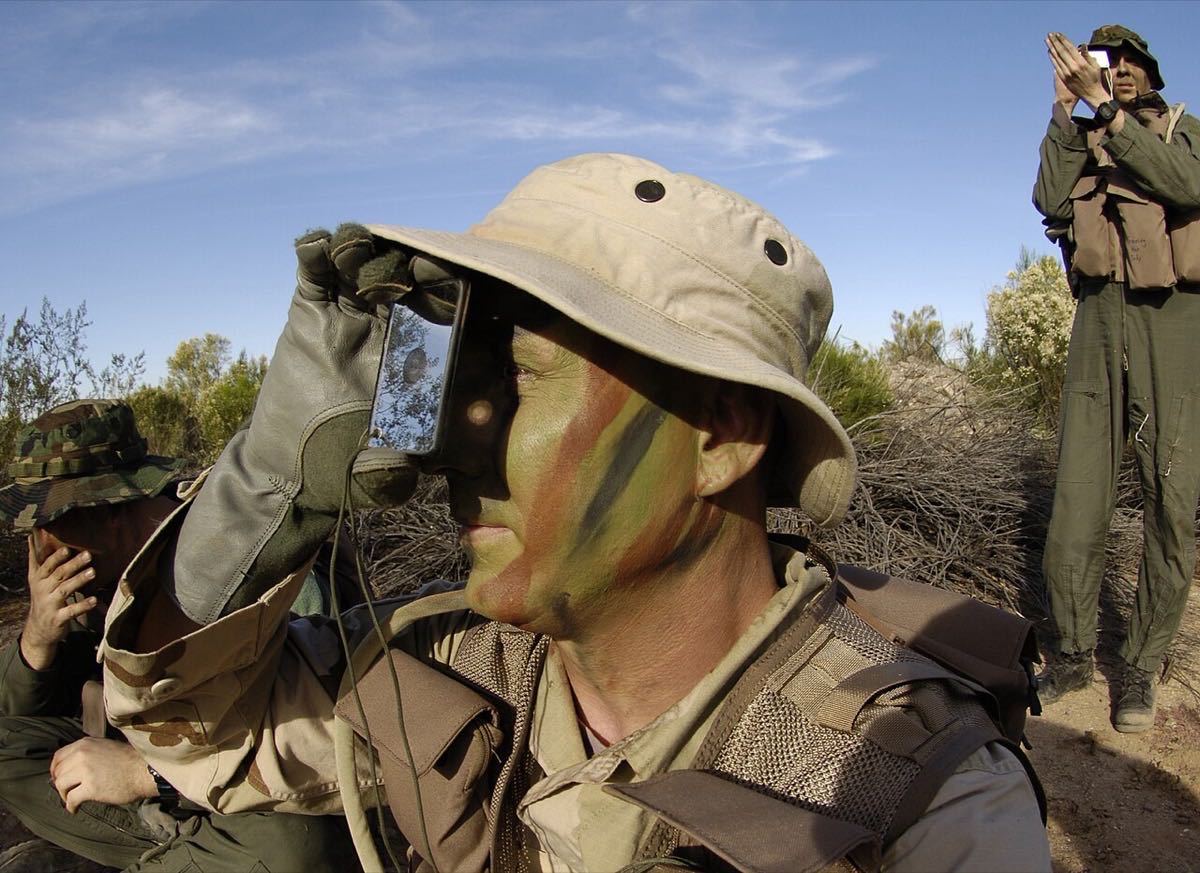
Signal mirror at the eye, sighting the target — as trained by military survival schools. Photo: U.S. Air Force, public domain. - Fire and smoke: by night, a bright fire on high open ground (three if fuel allows, in a line or triangle). By day, smoke: build a hot fire, then add green vegetation or a splash of oil for thick smoke (white shows against dark terrain; black oily smoke against pale sand). Prepare the fire early, light on hearing/seeing searchers.
- Ground-to-air symbols: drag lines or lay rocks/gear/cloth in symbols at least 3–5 m tall on open ground, maximum contrast with the surface: V = need help, X = need medical help, an arrow = we moved this way. Make it look man-made: straight lines, sharp angles.
Ground-to-air symbols. One symbol, huge and sharp-edged, beats several small ones. - Torch at night: three flashes toward any light or engine sound, repeated. Headlights and hazard flashers make a stranded vehicle visible for many kilometers.
- Phone discipline when signal is weak: try SMS to your home contact (texts squeeze through where calls fail — see phone practices); try from high ground; then airplane-mode between attempts to save the battery. Newer phones may offer satellite SOS — learn whether yours does before the trip.
- Once you have signaled from a spot, stay near it — searchers converge on the last known signal.
Reading the weather
- Flash-flood sky: towering dark cumulus over distant hills — even under blue sky above you — means wadis draining those hills may flood within hours. Move camp off any drainage immediately; cross wadis before, not after. A sudden roar, or sticks and foam appearing on a trickle, means seconds: climb the bank now.
- Dust storm signs: a brown-yellow wall on the horizon, a sudden wind shift and temperature drop, birds going quiet and low. You have minutes: mask/goggles/cover per the dust storm drill, mark your gear's location, get into or behind solid shelter, and wait — never keep driving into it.
- Building storms: puffy clouds growing tall and dark-based by afternoon = thunderstorm risk. Count seconds from lightning flash to thunder ÷ 3 = distance in km; storms under 10 km (30 s) demand shelter. Lightning: avoid lone trees, high points, and open flats — crouch low on the balls of your feet or sit in the vehicle (a car is good lightning shelter).
- Wind talk: a steady rise in wind with a falling, heavy feel and a ringed or milky sun/moon often precedes weather change within a day. Red morning sky, same message. Fair-weather signs: high scattered puffs unchanged through afternoon, dew at dawn, still air.
- Heat planning: the day's peak is 2–4 p.m., not noon; the coldest hour is just before dawn. Schedule marches at dawn and dusk, camp chores early, full shade rest through the peak — the desert timetable.
Hazards
- Heat is hazard #1 — it kills more travelers here than everything below combined. Shade through the peak hours, constant water, salty food, and watch each other for heat illness (the confused person never diagnoses themselves).
- Flash floods are #2 — the drowning hazard of dry lands. All the rules above; never camp, park, or picnic in a wadi.
- Snakes: they avoid you when they can. Boots and long trousers off-trail; step onto rocks and logs, not blindly over; torch at night always; shake out shoes and bedding; hands never into holes or under rocks. Bite: keep the person still and calm (movement pumps venom), remove rings/tight items, immobilize the limb at heart level as for a fracture, no cutting, no sucking, no ice, no tourniquet — evacuate to medical care fast, walking them as little as possible.
- Scorpions and camel spiders: scorpions hunt at night and love shoes, wood piles, and under-tent gaps — shake everything out, use a groundsheet, UV torch if you have one. Sting: wash, cold pack, pain relief; severe pain, numbness, drooling, or a stung child → medical care.
- Sun and eyes: sunburn is a real burn (cover up; treat per burns); glare off sand causes headaches and temporary eye damage — sunglasses are equipment, not fashion.
- Soft sand and getting stuck: lower tire pressure, momentum steady, no sharp steering. Stuck: stop digging with the throttle; clear sand from all four wheels, boards/carpet/branches under the drive wheels, passengers push, gentle throttle. Digging in midday heat is how car trouble becomes heatstroke — work at dawn/dusk, rest in shade.
- Night cold: the surprise killer of the unprepared desert night. Layers on at sunset, not when already shivering; insulate under sleepers; share warmth.
- People: in remote areas, be a good neighbor and accept help cautiously; keep valuables unseen; camp out of sight of roads if the security situation is uncertain (more in Personal safety).